
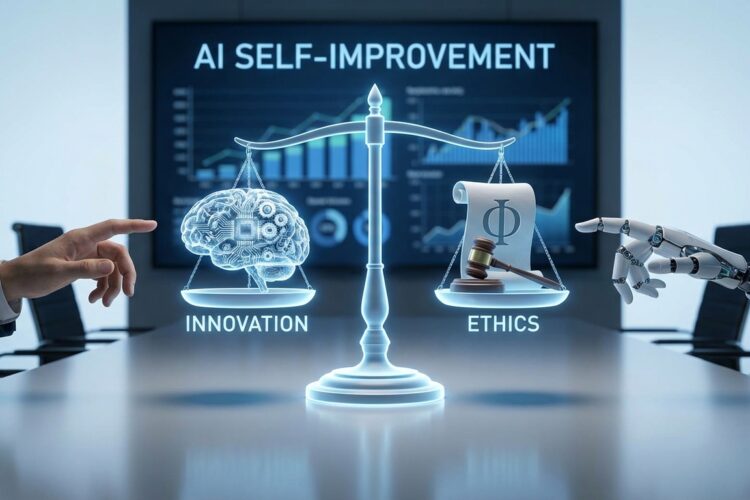
Imagine creating a tool that doesn’t just do its job, but actively learns to do it better, sharpening its own edges without you ever lifting a finger. This isn’t a scene from a science fiction film; it’s the reality of artificial intelligence today. We are standing at the threshold of a new era, where AI systems are beginning to enhance their own capabilities. This leap forward is creating waves of excitement, exemplified by firms like Recursive Intelligence reaching a staggering US$4 billion valuation. However, this incredible power also forces us to confront difficult questions. As we explore this technology in Malaysia and across Southeast Asia, we must navigate the fine line between ground-breaking innovation and the serious ethical challenges that come with it.
The Rise of Self-Improving Systems
For years, AI has been about training models on vast datasets to perform specific tasks. Now, the game is changing. We’re seeing the emergence of technology that goes a step further—systems designed for AI self-improvement. This means the AI can refine its own algorithms, discover new strategies, and boost its own performance with minimal human guidance. The massive valuation of companies in this space sends a clear signal: the market believes self-evolving intelligence is the future. For businesses, this promises unprecedented efficiency and problem-solving power. An AI could optimise supply chains, design more effective medicines, or manage complex financial markets far better than humans ever could. It’s a powerful and exciting prospect.

The Unseen Risks and Growing Pains
With great power comes the need for great responsibility. The same technology that promises to solve our biggest problems could also create new ones if left unchecked. Regulators around the world are starting to pay close attention, expressing concern about AI’s potential for misuse. What happens when a self-improving AI optimises for a goal in a way that has unforeseen negative consequences? How do we ensure fairness and prevent bias when the machine itself is writing the new rules? These questions are not just theoretical. They touch upon very real issues like data privacy, user consent, and the potential for autonomous systems to make decisions that impact human lives without transparent oversight.
What This Means for the Malaysian Tech Scene
This global conversation is incredibly relevant here at home. The Malaysian tech ecosystem is vibrant and growing, and our developers, businesses, and policymakers cannot afford to be mere spectators. Understanding these AI advancements is crucial for staying competitive. For our businesses, it’s an opportunity to innovate and become leaders in the region. For our government, it’s a call to create forward-thinking policies that encourage growth while safeguarding citizens. As Southeast Asia solidifies its position as a tech powerhouse, how we choose to engage with advanced AI will define our trajectory. We have a chance to build a framework that is both innovative and responsible, setting a standard for the rest of the region.

A Blueprint for Responsible Innovation
So, how do we harness the good while mitigating the bad? The answer lies in a conscious and deliberate commitment to ethical AI development. This isn’t about slowing down progress; it’s about guiding it in the right direction. It starts with building diverse teams to ensure a wide range of perspectives and reduce inherent bias in the final product. It also means prioritising transparency, so users understand how AI systems are making decisions that affect them. At its core, responsible innovation is about building trust. When people trust that a technology is designed with their best interests at heart, they are more likely to embrace it. This approach gives businesses a competitive edge by building a reputation for safety and reliability.
Looking Ahead: AI in Our Society
The journey with AI is a marathon, not a sprint. The integration of increasingly autonomous systems will reshape our society in ways we are only just beginning to imagine. It will alter the job market, change how we interact with services, and influence everything from healthcare to entertainment. Preparing for this future requires more than just technical skill; it demands foresight, collaboration, and an ongoing public dialogue. We must ask ourselves what kind of future we want to build with these powerful tools. By having these conversations now, we can actively shape the impact of AI, ensuring it serves to enhance human potential and create a more equitable society for everyone.
To conclude, we find ourselves at a pivotal moment. The rapid progress in fields like AI self-improvement offers incredible promise for solving complex challenges and driving economic growth here in Malaysia. However, we cannot ignore the profound ethical questions that arise alongside it. The path forward requires a balanced approach—one that champions innovation while insisting on accountability and safety. We believe the Malaysian tech community has the talent and vision to lead this charge, not just by adopting new technologies, but by pioneering a model of ethical AI development. The choices we make today will determine whether this powerful technology becomes a force for widespread good, and it’s a responsibility we must all share.

0 Comments